Home

Emergency

Fees

Blog

Contact

Call Now

TMJ and Jaw Pain Treatment in London

Temporomandibular disorder, usually called TMJ or TMD, is a group of problems affecting the jaw joints and the muscles you chew with. It can cause pain in the jaw, face or ear, clicking or popping when you open your mouth, and headaches around the temples. According to the NHS, it is not usually serious and generally gets better on its own. That is reassuring, but it does not help much when you cannot eat comfortably or you wake up with an aching jaw.

At Maida Smiles, our dentists can check whether your teeth, bite or clenching habits are part of the picture and help you decide what to do next. We start with the simplest options and only move on when they make sense for you.

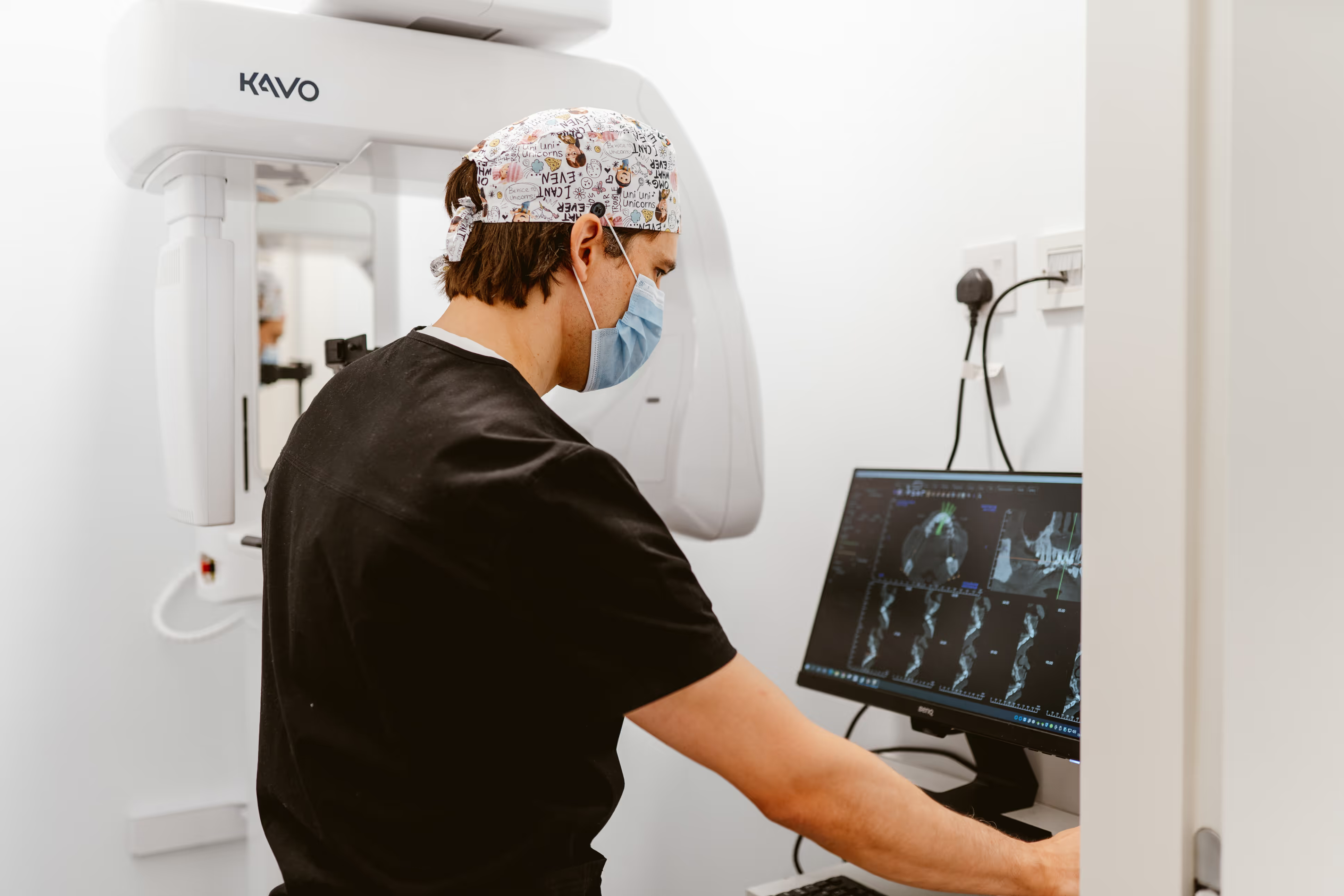
Dental professional reviewing a patient's scan on a treatment room monitor

Key takeaways

  • TMJ pain is common and often settles with simple self care, so a calm first step is usually best.
  • A dentist can look for dental causes such as grinding, worn teeth or an uneven bite.
  • A custom night guard can help some people, but the research behind splints is limited, so we explain what to expect before you commit.
  • Locked jaw, trouble eating or drinking, vision changes or severe headaches need urgent medical advice (see below).

What is TMJ disorder?

Your temporomandibular joints are the two hinges that connect your lower jaw to your skull, one in front of each ear. TMJ disorder means the joint, the surrounding muscles, or both are not working comfortably.

The NHS lists these common signs: pain around the jaw, ear or temple; clicking, popping or grinding noises; headaches at the temples; difficulty opening your mouth fully; the jaw locking; pain that gets worse when you chew or feel stressed; and disturbed sleep. Some people also notice toothache with no obvious cause, which is why jaw problems are often mistaken for dental ones. A dentist can help you tell the difference.

Confident smile after PRGF dental treatment at Maida Smiles

Custom night guards at Maida Smiles

A custom night guard is made to fit your teeth, which is quite different from a shop bought one. Ours are priced at £400 per arch, upper or lower, as listed on our fee page. A guard worn on the wrong teeth or fitted badly can cause problems of its own, which is one reason the NHS recommends having one made by a dentist.

You can check current prices before you book. Treatment over £250 can be spread over 12 months with 0% finance, as explained under dental finance.

View Fees

TMJ treatment FAQs

What causes jaw pain, clicking and tension?

There is rarely one cause. The NHS points to teeth grinding, wear and tear in the joint, a blow to the head or face, stress and an uneven bite. In practice it is often a mix: a stressful few months, clenching at night, a habit of chewing on one side.

Grinding and clenching deserve a special mention. Leeds Teaching Hospitals NHS Trust notes that bruxism does not cause TMD by itself but can make an existing problem worse. If you suspect you grind, tell us at your appointment and we can look for the signs. Stress can play a part too, so it helps to mention how you have been sleeping and feeling.

Snoring and sleep apnoea can also be linked to night time grinding. If your partner hears you stop breathing at night, or you feel exhausted all day, mention it to us and your GP.

When jaw pain needs urgent medical help

Most jaw pain is not an emergency. The NHS advises contacting your GP or calling 111 if you cannot eat or drink, your jaw is locked, you have frequent severe headaches, your scalp or temples are tender, or your vision changes. These can point to causes outside the jaw that need prompt attention. If your jaw has dislocated and will not go back, seek emergency care. If the pain is coming from a broken or abscessed tooth rather than the jaw, you can book an emergency appointment.

What happens at a TMJ assessment?

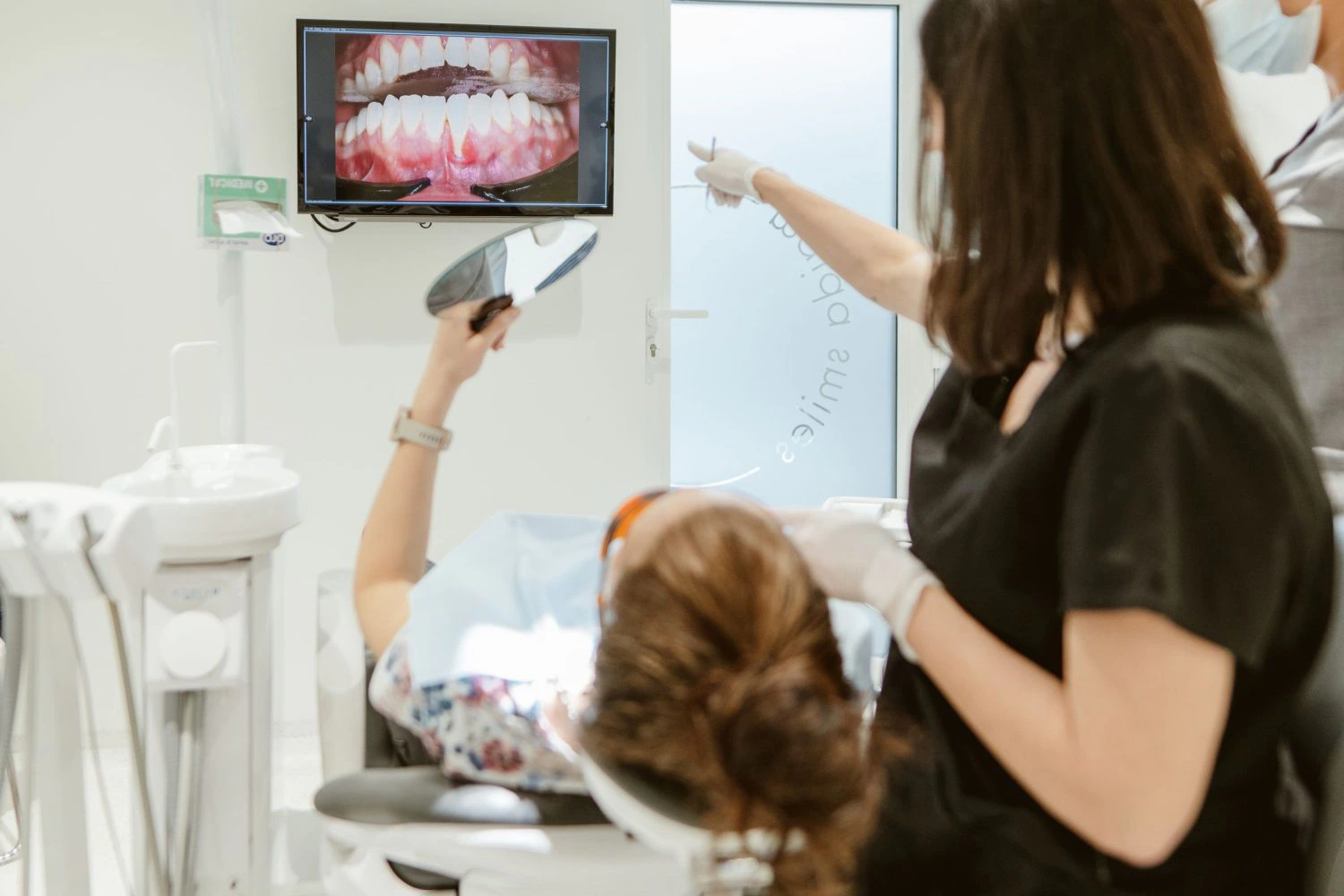
Your appointment begins with a conversation. We ask when the pain started, what makes it better or worse, whether you clench or grind, and how you sleep. Then we examine your jaw, the muscles around it, your teeth and your bite, and watch how your jaw moves when you open and close.

Scans are not routine. We only suggest imaging when the examination points to something that a picture could clarify. Often the most useful outcome is simply ruling things in or out: is this muscle tension, a joint problem, a tooth problem, or something your GP should look at?

Assessments can be part of a dental examination, so there is no need to wait for a routine check up if your jaw is troubling you. [CONFIRM: TMJ assessment is offered, which named dentist carries it out (no site profile states TMJ work), and how it is priced]

Treatment options, in a sensible order

National guidance from the Royal College of Surgeons of England on painful TMD in adults puts supported self management first for everyone. That means understanding the condition, gentle jaw exercises, heat, soft foods and breaking habits like clenching. It is simple, low risk and often enough.

Physiotherapy, with jaw exercises and manual therapy, is also worth considering for most types of TMD according to the same guidance. [CONFIRM: physiotherapy referral availability] Medication such as short courses of anti inflammatory painkillers may help during a flare up, and your GP can advise on this.

A splint, which most people know as a night guard, is another option. The guidance says splints are most likely to help muscle related TMD and TMD headaches, are not suitable simply for joint noise, and should be tried for around three months of night time use before judging whether they help. Full coverage hard splints are generally preferred over soft ones.

We should be straight with you about the evidence. A 2024 Cochrane review of 57 trials covering 2,846 people found the certainty of the evidence for occlusal splints and similar treatments was very low. A night guard is not a cure, and we would never promise one. For some people it reduces muscle strain and protects teeth from wear. For others it makes little difference.

Irreversible treatments, such as reshaping teeth to change your bite, are not supported as a way to treat TMD, and we do not recommend them for this purpose. If your problem is severe or does not improve, we can discuss referral to a specialist.

What you can do at home today

  • Eat soft foods for a few days and cut food into small pieces.
  • Hold a warm or cold pack, wrapped in a tea towel, against the sore side.
  • Gently massage the muscles in front of your ear.
  • Keep your teeth slightly apart when you are not eating.
  • Avoid chewing gum, pen tops and nails, and try not to yawn very wide.
  • Paracetamol or ibuprofen can help if you can take them safely.

Why patients come to us for jaw pain

We are a private practice on Sutherland Avenue, two minutes on foot from Maida Vale tube station, with late opening until 8pm on Tuesdays and Thursdays. You can meet our clinicians before you book. If you are local, you will find directions and parking information for our Maida Vale dentist practice.

Can TMJ go away on its own?

Often, yes. The NHS says TMD generally gets better by itself, particularly with self care. If your pain lasts more than a few weeks, keeps returning or interferes with eating or sleep, it is worth having it checked.

Is TMJ a dental problem or a medical one?

It can be both. The joint and muscles are medical in nature, but teeth grinding, wear and bite problems fall within dentistry. A dentist can assess the dental side and tell you whether your GP or another professional should be involved.

Can TMJ cause toothache?

It can. Jaw muscle pain is sometimes felt in the teeth, especially the back ones, and may be mistaken for a dental infection. A dental examination helps separate the two.

Will a night guard cure my TMJ?

No treatment can promise a cure. A night guard may ease muscle strain and protect your teeth, and it is more likely to help muscle related pain than joint clicking. We would review how you are getting on after a few months of regular use.

How long does a night guard take to work?

Guidance suggests judging a splint after around three months of use, so patience is needed. Some people feel better sooner, others find it makes no difference and we discuss alternatives.

How do I book a TMJ assessment?

Call us on 020 3583 9809 or book online. Tell us it is jaw pain when you book so we can allow enough time.

What we offer

Your local dentist for life, Maida Smiles Dental Clinic in Maida Vale,  is a cosmetic, restorative and dental implant clinic in the heart of  London that also serves patients with general, everyday smile concerns.  We’re here no matter your smile concern.

See all services

Three Maida Smiles team members smiling together in a treatment room

Jaw pain getting in the way? Book a TMJ assessment at Maida Smiles, 207 to 209 Sutherland Avenue, London W9 1RU, or call 020 3583 9809.

New Patient Registration

Fill the form

Thank You!

Thank you for getting in touch. We have received your details and a member of our patient care team will be in touch shortly. Please look for an email from us within the next few hours.

OK

Oops! Something went wrong while submitting the form.
WhatsApp