Home

Emergency

Fees

Blog

Contact

Call Now

Wisdom Teeth Removal in London

Wisdom teeth are the last molars to come through, usually between your late teens and early twenties. Many people keep them without any trouble. But when a wisdom tooth is stuck under the gum, decaying, repeatedly infected or damaging the tooth next to it, removal can be the best answer. At Maida Smiles, we assess each tooth individually and only recommend removal when there is a good reason.

The NHS says that a wisdom tooth that is not causing problems is normally left alone and monitored. Our job is to help you work out which group you are in, explain what surgery involves, and look after you before, during and after it.

Oral surgery at Maida Smiles, Maida Vale

Key takeaways

  • You do not always need your wisdom teeth out. Removal is recommended for problems such as repeated infection, decay or damage to neighbouring teeth.
  • A panoramic image is usually enough to plan treatment. A 3D scan is only needed in selected cases.
  • Local anaesthetic is standard, and sedation is available for anxious patients or more complex cases.
  • Most people are back to normal activity within a few days. Swelling is usually worst for around three days, according to the NHS.
  • Our extractions start from £300, with surgical extractions from £495.

When do wisdom teeth need to be removed?

NICE guidance says that wisdom teeth which are impacted but healthy should not be removed as a precaution, and that surgery should be limited to people with evidence of disease. The problems it lists include decay that cannot be restored, untreatable infection in the tooth or its surroundings, cysts and damage to neighbouring teeth.

In practice, the reasons we most often see are:

  • Repeated pericoronitis, which is infection and swelling of the gum around a partly erupted tooth. NICE says a single mild episode should not usually lead to surgery, but second or later episodes are an appropriate reason.
  • Decay in a wisdom tooth that is hard to reach or cannot be filled.
  • Pain, swelling or an abscess linked to the tooth.
  • Damage to the tooth in front, such as decay or resorption caused by pressure.
  • Cysts or other changes seen on an image.

Food trapping, gum disease and persistent bad taste are other reasons the NHS gives for considering removal. If your wisdom teeth are healthy, fully through and easy to clean, the Oral Health Foundation says they usually stay.

Confident smile after PRGF dental treatment at Maida Smiles

How much does wisdom tooth removal cost?

Our fee list shows regular extractions from £300 and surgical extractions from £495, with a new patient examination at £110 and a digital panoramic image at £75. You can see the full list of extraction fees. The cost of sedation, if you choose it, is quoted separately. [CONFIRM: sedation fee]

In England, NHS dental treatment for extractions falls under Band 2, with a fixed charge set by the NHS. Maida Smiles is a private practice, so our fees are private fees. Treatments over £250 can be spread over 12 months with 0% finance, and many private insurers are accepted.

View Fees

Wisdom teeth removal FAQs

When removal is not necessary

We do not remove teeth for the sake of it. If your wisdom tooth is impacted but you have no pain, infection or disease, your dentist can simply keep an eye on it at your regular check ups. This is exactly what the national guidance supports. If you are unsure, we are happy to give a second opinion.

What happens at your assessment?

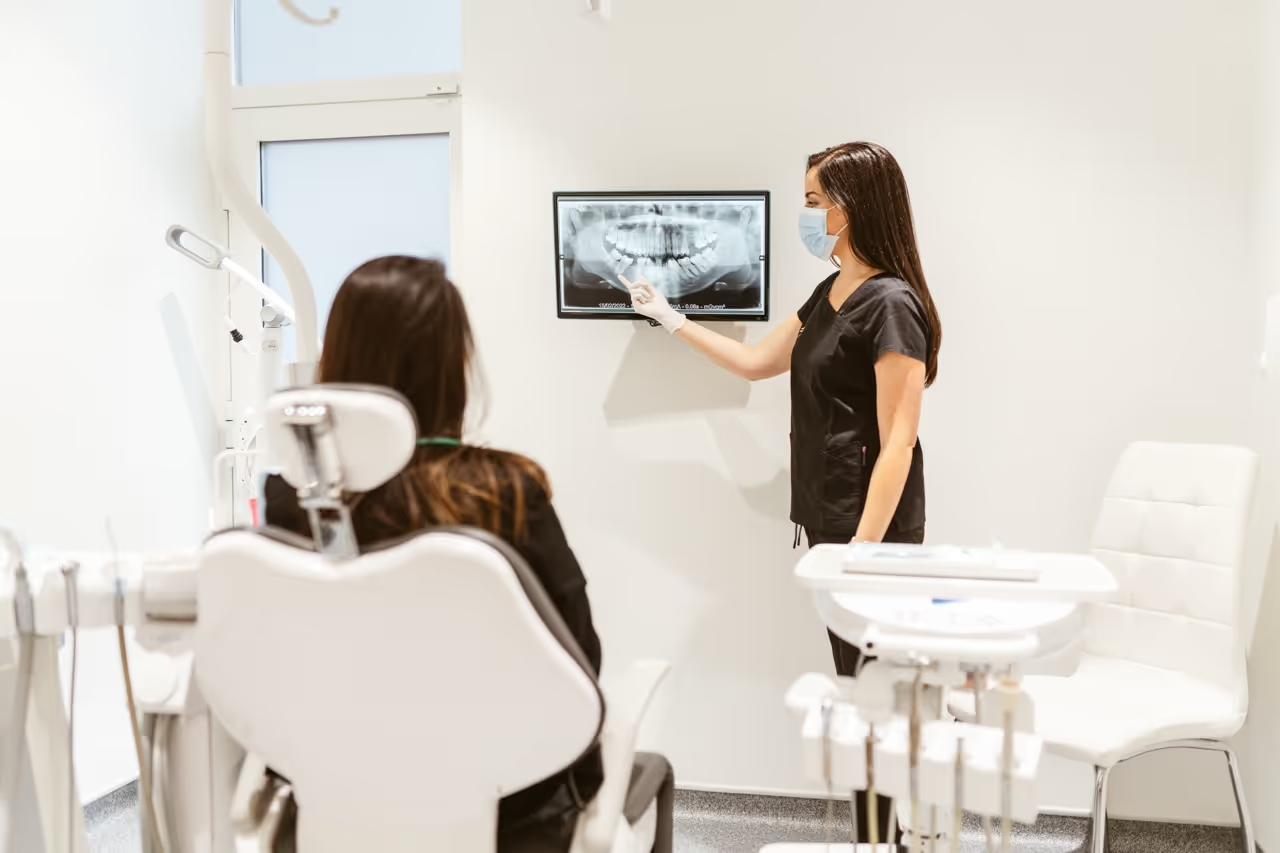
We start by talking through your symptoms and examining your mouth. An image is usually needed to see the position of the tooth, its roots and its relationship to nearby structures such as the nerve in your lower jaw. Our fee list shows a digital panoramic image at £75 and small images at £12.

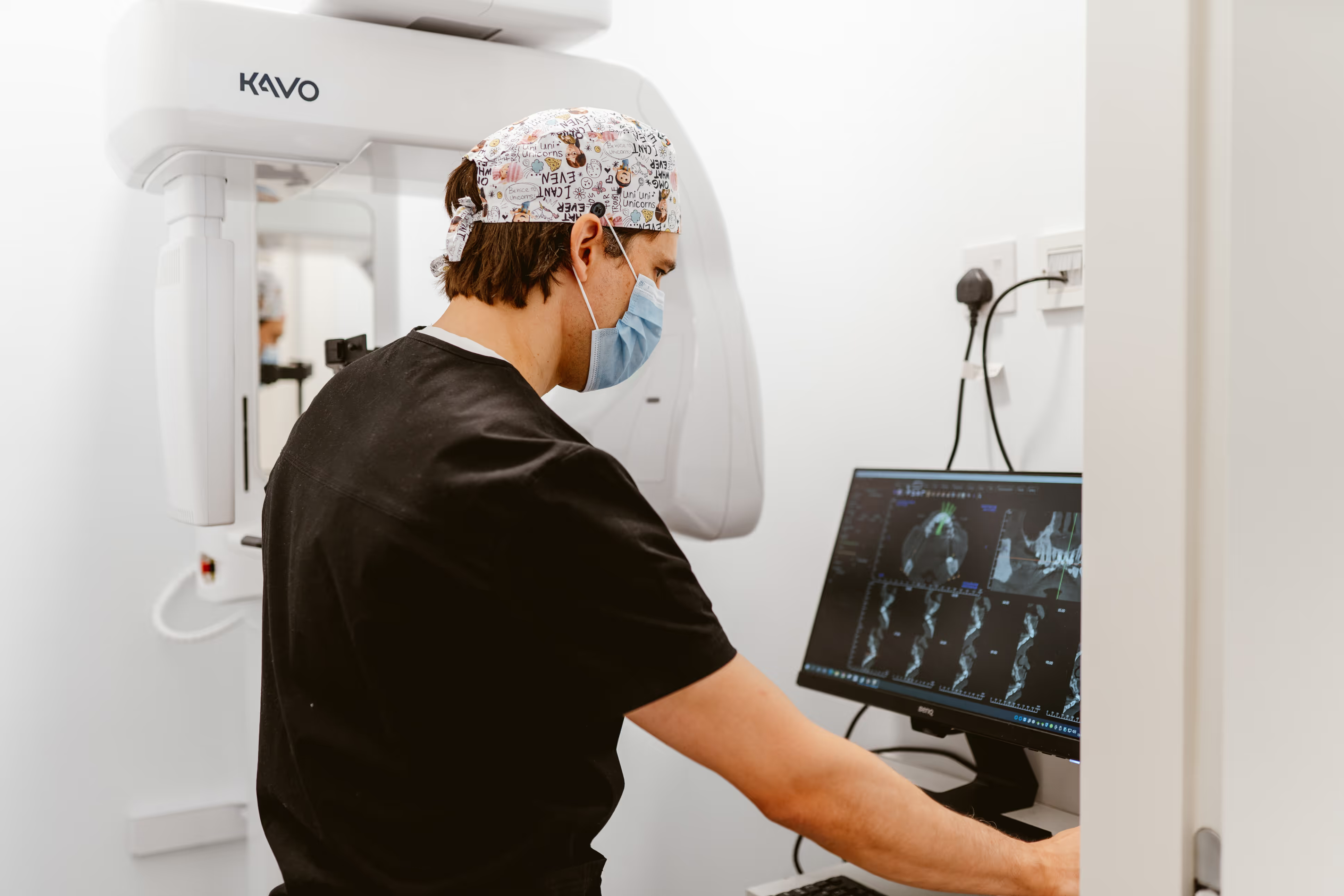
A 3D CBCT scan, priced at £175 per arch, may be recommended in selected cases. The Royal College of Surgeons guidance says CBCT should not be used routinely, but can be considered when standard images show the tooth is very close to the jaw nerve and the result would change the treatment plan. You can read how we use CBCT scans for planning. [CONFIRM: CBCT use for wisdom teeth]

You will leave your assessment knowing whether removal is advisable, what type of extraction is likely, which anaesthetic options suit you, and how much it will cost.

Types of wisdom tooth extraction

Simple extraction. If a tooth has fully come through, it can often be removed like any other tooth. The standard process is explained under tooth extraction.

Surgical extraction. If a tooth is impacted, partly through the gum or has curved roots, the gum may need to be opened and a little bone removed. The tooth may be divided into sections for easier removal. The area is then closed with dissolvable stitches. We cover surgical removal in more detail in oral surgery.

Referral for complex cases. Where a lower wisdom tooth lies very close to a nerve, the Oral Health Foundation notes that you may be referred to a specialist. We would explain why and talk you through the options. [CONFIRM: referral pathway and whether coronectomy is offered]

If you are unsure whether a general dentist or an oral surgeon is right for your case, ask us at your assessment and we will explain which route we would suggest and why.

Why wisdom teeth cause problems

Wisdom teeth are the last to arrive, and by then there is often little room left. A tooth can come through only partly, lie at an angle, or stay buried in the gum or jawbone, which dentists call impacted. A partly erupted tooth can trap food and bacteria under the gum, which is what leads to pericoronitis. A tooth leaning against its neighbour can make it hard to clean, which may lead to decay in one or both teeth.

Not every impacted tooth causes trouble, and many are never noticed. That is why your dentist looks at the tooth, your symptoms and an image before deciding anything.

Anaesthesia and sedation

Wisdom teeth are usually taken out under local anaesthetic, so the area is numb and you stay awake. You may feel pressure and movement but should not feel pain. The NHS says the procedure should take no more than 40 minutes.

If you are anxious about dental treatment, or your case is more involved, intravenous sedation is an option that helps you feel relaxed. After sedation, the NHS advises not driving for 24 hours, and after a general anaesthetic, 48 hours. How it works is explained in our information on dental sedation. [CONFIRM: sedation availability and price for wisdom tooth removal]

Risks and complications

Every surgical procedure has risks, and we would rather you heard them from us. The main ones are:

  • Dry socket. This is a painful condition in which the blood clot in the socket is lost or does not form. The Royal College of Surgeons guidance describes it as the most common complication, reported in around 5 percent of routine extractions and up to almost 30 percent after surgical removal of wisdom teeth. Not smoking and following your aftercare advice lower the risk.
  • Infection. This may need antibiotics, according to the NHS.
  • Bleeding. A small amount of oozing is normal. Firm pressure on a clean pad for at least 10 minutes usually stops it.
  • Nerve changes. A leaflet from King's College Hospital says about one in 10 people have tingling or numbness lasting several weeks after removal of impacted wisdom teeth, and fewer than one in 100 have problems lasting more than a year. The NHS says numbness of the tongue, lip or chin usually improves over weeks or months. Your dentist will tell you how close your tooth is to the nerve.

We will talk through your individual risks at your consultation and answer every question.

Recovery: what to expect, day by day

Recovery varies, but the NHS and King's College Hospital describe a broadly similar pattern.

  • First day: rest. Bite gently on the gauze if you bleed. Avoid hot drinks and do not rinse your mouth vigorously.
  • Days one to three: swelling and discomfort are usually at their worst for around three days. Pain relief as advised and a cold pack on the cheek can help. From the day after surgery, warm salt water rinses are recommended.
  • First week: eat soft food and avoid hard or small foods that could lodge in the socket. Avoid smoking and alcohol. Many people return to normal activity the day after, though more complex surgery or a general anaesthetic can mean one to three days off.
  • Up to two weeks: soreness and bruising may last this long. Dissolvable stitches disappear in around two weeks.

Contact us straight away if you have bleeding that will not stop, severe or worsening pain or swelling, pain with a bad taste, a fever or you feel unwell. Numbness or tingling in your lip or tongue in the days after surgery should also be reported. If you need urgent help with an impacted wisdom tooth, we explain how to reach us. [CONFIRM: out of hours contact arrangements]

Preparing for your appointment

  • Eat normally beforehand unless you are having sedation, in which case we will give you specific instructions.
  • If you are having sedation, arrange for someone to take you home and stay with you. Do not plan to drive, as the NHS advises waiting 24 hours after sedation.
  • Let us know about any medicines you take, allergies or medical conditions, and tell us if you smoke, as this affects healing.
  • Wear comfortable clothing, and plan a quiet day afterwards.
  • Stock up on soft food, such as soup, yoghurt and scrambled eggs, so you do not have to think about it afterwards.

Looking after the socket afterwards

The first few days set the tone for healing. A blood clot forms in the socket, and protecting it is the main goal. Avoid poking the area with your tongue or fingers, smoking, drinking through a straw and rinsing vigorously during the first day. From the day after surgery, gentle warm salt water rinses are recommended, as the King's College Hospital leaflet advises.

Take pain relief as directed, and use a cold pack on the cheek for the first day or two if it helps with swelling. Brush your other teeth as normal, and stay gentle around the area. Dissolvable stitches do not need removing. Come back to see us if you are worried about anything, and please do not wait for a scheduled review if something does not feel right.

Questions to ask before you decide

  • Is this tooth causing a problem now, or could it be monitored?
  • What type of extraction do you expect, and why?
  • How close is the tooth to the nerve, and what does that mean for me?
  • What are the anaesthetic or sedation options, and what do they cost?
  • What are the risks in my case, and how are they reduced?
  • How much time should I plan to take off work or other commitments?
  • What should I do and who do I call if I am worried afterwards?

If you would like a second opinion on a recommendation you have already been given elsewhere, we are happy to help.

Why have your wisdom teeth treated at Maida Smiles?

We are a private practice on Sutherland Avenue, two minutes from Maida Vale tube, open until 8pm on Tuesdays and Thursdays. You will be told what is recommended, why, and what the alternatives are, in writing, before any treatment starts.

Do all wisdom teeth need to be removed?

No. According to NICE, healthy impacted wisdom teeth should not be removed as a precaution. Removal is advised when there is infection, decay, damage to other teeth or another problem.

Is wisdom tooth removal painful?

You should not feel pain during the procedure, because the area is numbed. Afterwards, soreness and swelling are normal and usually worst for around three days. Pain relief and following aftercare advice help.

How long does recovery take?

Many people feel back to normal within a few days. Soreness and bruising can last up to two weeks, and more complex surgery can mean a longer recovery.

What is dry socket and how can I avoid it?

Dry socket happens when the blood clot in the socket does not form or is lost, which causes severe pain a few days after extraction. Avoid smoking, spitting or rinsing hard, and follow your aftercare instructions. Contact us if pain worsens after the third day.

Can wisdom tooth removal damage a nerve?

Occasionally, yes. Tingling or numbness can occur, and King's College Hospital says it lasts for several weeks in about one in 10 people and beyond a year in fewer than one in 100. We assess nerve position before surgery.

When can I eat and drink normally?

You can start with soft, lukewarm food once the numbness has worn off. Avoid very hot drinks, hard and small foods and alcohol for the first week.

Can I get my wisdom teeth removed on the NHS?

Yes, in England if treatment is clinically necessary and you are seen by an NHS dentist, the NHS Band 2 charge applies. We are a private practice. We can give you a private quote and explain your options.

What we offer

Your local dentist for life, Maida Smiles Dental Clinic in Maida Vale,  is a cosmetic, restorative and dental implant clinic in the heart of  London that also serves patients with general, everyday smile concerns.  We’re here no matter your smile concern.

See all services

Dental professional pointing to a patient's X-ray displayed on a wall monitor

Wisdom tooth troubling you? Book an assessment at Maida Smiles, 207 to 209 Sutherland Avenue, London W9 1RU, or call 020 3583 9809.

New Patient Registration

Fill the form

Thank You!

Thank you for getting in touch. We have received your details and a member of our patient care team will be in touch shortly. Please look for an email from us within the next few hours.

OK

Oops! Something went wrong while submitting the form.
WhatsApp